



16790753702383.jpg?v=1679075372)

16790746985853.jpg?v=1679074700)


16790757289763.jpg?v=1679075731)

A sweaty face during a meeting, in public, or on a date is one of the most frustrating places to deal with sweat. You cannot easily cover it. You cannot wipe it without disturbing makeup. And standard underarm antiperspirants are not built for skin this sensitive.
The good news: facial sweat is very manageable once you use the right products and a repeatable routine. This guide covers what causes facial sweating, how to build a prep + maintenance routine, and the targeted products — like Carpe Face Lotion — that are Designed for people who experience heavy sweating on the face and forehead.
Why Do You Sweat on Your Face?
Your face contains a high concentration of eccrine sweat glands — particularly on the forehead, upper lip, and scalp area. They are there to help you cool down. When your body heats up, stress spikes, or your environment is warm, these glands fire.
For some people, facial sweat shows up even in situations that do not call for it. That pattern has a name: craniofacial hyperhidrosis, or more broadly facial hyperhidrosis. Our Excessive Sweating of the Face and Head article covers the biology in detail, and why is my face sweating walks through common triggers.
The American Academy of Dermatology hyperhidrosis overview notes that facial hyperhidrosis, while less common than underarm or palmar, does affect a meaningful portion of hyperhidrosis sufferers.
What's the Best Way to Stop Face Sweat During the Day?
Facial sweat management is more about a routine than a single product. Here is the framework that works for most people.
Step 1: Start with Clean, Dry Skin
Gentle cleansing before application matters more than people think. Oil and sweat residue from the previous day reduce how well sweat-absorbing products adhere.
Step 2: Apply a Sweat-Absorbing Face Lotion
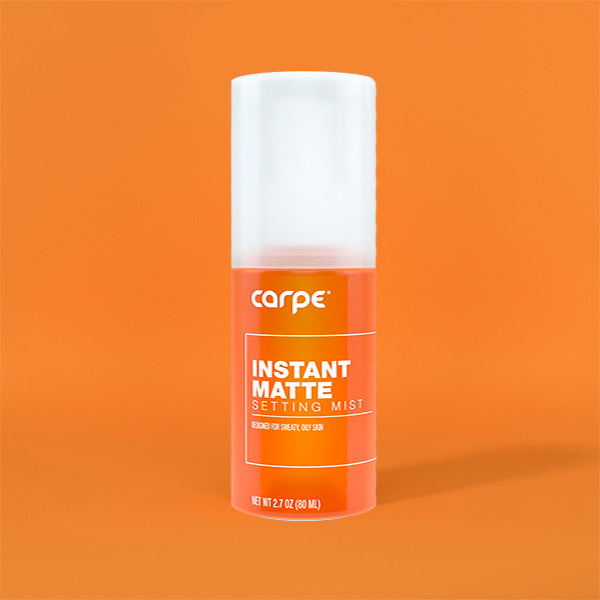
Carpe Face Lotion is a pore-minimizing, sweat-absorbing shine stopper formulated specifically for the face and forehead. Unlike underarm antiperspirants, it does not contain aluminum actives — facial skin is too sensitive for those. Instead, it uses silica and absorbent ingredients to help reduce visible shine and moisture across a full day.
Apply a thin layer to forehead, T-zone, upper lip, and anywhere else you notice heavier sweat. Allow it to absorb for 1–2 minutes before moving on.
Step 3: Layer with a Primer if You Wear Makeup
Face Primer w/ SPF gives you two wins in one step: SPF 30 sun protection plus a sweat-absorbing, pore-minimizing finish that helps makeup stay in place.
Step 4: Carry Face Wipes for Touch-Ups
Mid-day, rather than blotting with tissues (which can smear makeup and miss residue), use a dedicated Face Wipes product. They remove sweat and oil without disturbing foundation or sunscreen.
What About Facial Hyperhidrosis?
If facial sweating is happening in cool environments, during rest, or in ways that do not match what you are doing, facial hyperhidrosis may be part of the picture. Treatment options for more persistent cases include:
- Topical anticholinergic wipes (e.g., glycopyrronium), available by prescription
- Botulinum toxin injections into affected areas (this is done selectively on the face due to the risk of temporarily affecting nearby muscles)
- Oral anticholinergics — effective but with systemic side effects
The Mayo Clinic hyperhidrosis treatment overview outlines these options. For most people, though, a strong daily routine using sweat-absorbing facial products closes most of the gap.
How Can You Stop Sweating on Your Face at Night?
Night sweats on the face are a common subset of the problem. Some strategies:
- Sleep in a cooler room (65–68°F is often ideal)
- Use moisture-wicking pillowcases (bamboo or performance fabrics)
- Avoid alcohol, spicy food, and heavy meals within 2–3 hours of bedtime
- Manage stress before bed — anxiety-driven night sweats are common
- Stay hydrated during the day — counterintuitive, but chronic dehydration can make sweating feel more disruptive
If facial night sweating is sudden, drenching, or paired with other symptoms like fever or weight change, that is a pattern to raise with a physician.
What Triggers Make Face Sweating Worse?
Dialing back the biggest triggers tends to matter as much as any product. Common culprits:
- Spicy food — capsaicin activates heat receptors, triggering sweat
- Caffeine — activates the sympathetic nervous system
- Alcohol — dilates blood vessels, triggering facial sweat and flushing
- Stress — especially public speaking or performance situations
- Heavy, occlusive skincare during the day (trap heat and sweat)
- Hot, humid environments — see How to Dress in the Summer with Hyperhidrosis for practical tactics
Reducing even 2–3 of these can have a meaningful impact.
Pre-Event Face Sweat Playbook
For high-stakes events (interviews, weddings, presentations, first dates), pretreating is the game-changer. A sample playbook the night before and day-of:
1. Night before: gentle face wash + Carpe Face Lotion. Sleep cool.
2. Morning: face wash, Face Lotion, wait 1–2 minutes, then Face Primer w/ SPF.
3. 30 minutes before the event: blot with a Face Wipes product. Reapply primer if needed.
4. In the moment: keep wipes handy. Avoid caffeine, alcohol, and spicy food on the day if you know they affect you.
Common Mistakes to Avoid
- Using underarm antiperspirant on the face. Aluminum actives are not designed for facial skin and can cause irritation.
- Blotting with rough tissues or paper towels. This abrades skin and disturbs makeup.
- Skipping moisturizer entirely. Dry, tight skin can actually trigger more oil production, which reads as "shine" on top of sweat. A lightweight, sweat-absorbing lotion addresses both.
- Giving up after a day. Like all antiperspirant-adjacent products, facial sweat lotions work best when used consistently.
Emotional Benefit: Meet the Moment Without Wiping
The real goal of a facial sweat routine is not perfection — it is not thinking about it. A routine that holds up lets you shake a hand, lean into a conversation, or sit under stage lights without mentally tracking your forehead. That is what these products were built to deliver.
The Bottom Line
To stop sweating on your face, build a short daily routine: cleanse, apply a sweat-absorbing face lotion like Carpe Face Lotion, layer a primer if you wear makeup, and carry wipes for touch-ups. Reduce major triggers where you can. For more persistent or severe facial sweating, a dermatologist can walk through prescription-level options.
Facial sweat is manageable. The right products plus a repeatable routine turn it from a daily anxiety into something you barely think about — exactly what a well-designed sweat-care system should do.


